


Retatrutide has moved from an early-stage peptide research candidate into a much broader clinical development program. During 2026, new Phase 3 results expanded the available research data across obesity, type 2 diabetes, cardiovascular disease, knee osteoarthritis, and other related areas.
The research is attracting attention because retatrutide is designed as a triple hormone receptor agonist, targeting glucose-dependent insulinotropic polypeptide (GIP), glucagon-like peptide-1 (GLP-1), and glucagon receptors. Earlier Phase 2 research established the initial clinical signal, while newer Phase 3 programs are providing larger and longer datasets.
For researchers following peptide science, the latest developments are particularly relevant because they show how investigations are progressing from early proof-of-concept studies toward large, indication-specific clinical programs.
Research-use notice: This article is provided for informational and research purposes. It does not provide instructions for human use, dosing, administration, diagnosis, or treatment.
What Is Retatrutide Research Focused On?
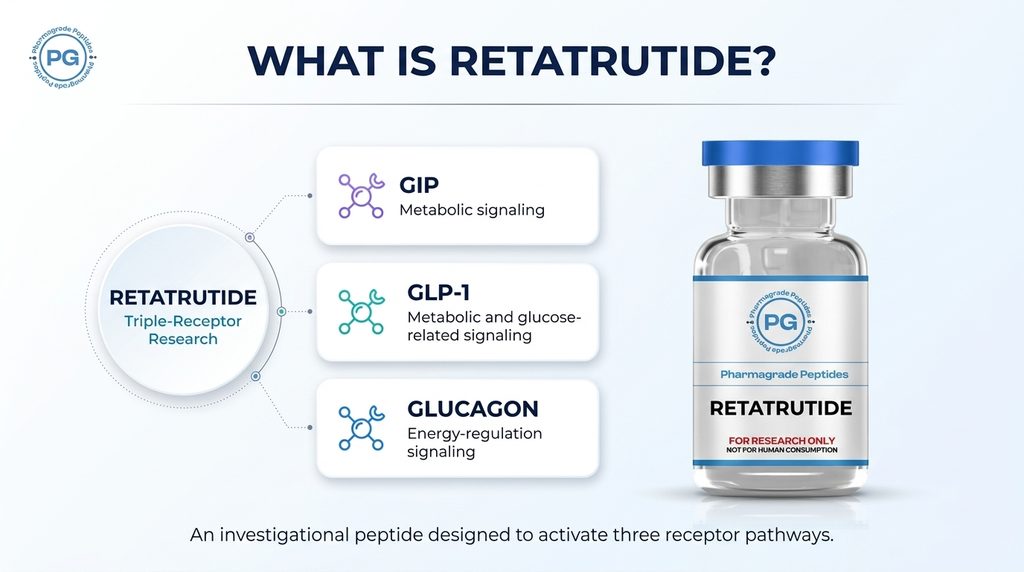
Retatrutide, also known as LY3437943, is an investigational peptide designed to activate three receptor pathways within a single molecule: GIP, GLP-1, and glucagon.
This mechanism distinguishes retatrutide from peptide candidates that primarily target one or two of these pathways. Researchers have been investigating whether simultaneous activity across these receptors can produce distinct metabolic effects.
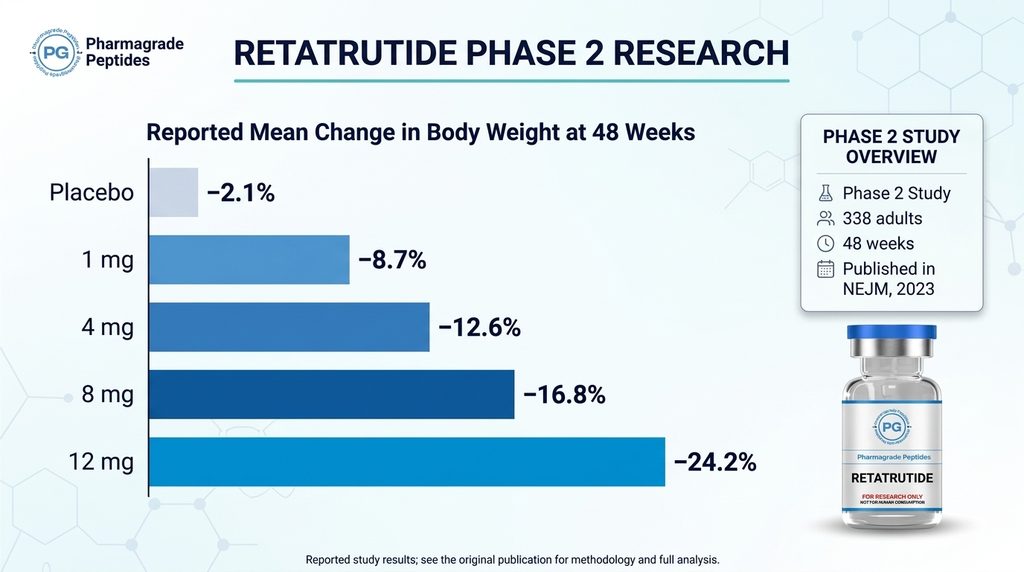
The initial Phase 2 study, published in the New England Journal of Medicine in 2023, included 338 adults and evaluated several retatrutide dose groups over 48 weeks. The study reported substantial changes in body weight across the investigational groups and identified gastrointestinal events as the most common adverse events.
That study became an important foundation for the subsequent Phase 3 development program.
Retatrutide Research Update: Phase 2 Findings
The 2023 Phase 2 trial remains one of the most important published studies for understanding the early development of retatrutide.
Researchers conducted a randomized, double-blind, placebo-controlled study involving adults with obesity or overweight accompanied by a weight-related condition. The trial examined retatrutide at several dose levels and followed participants for 48 weeks.
At 48 weeks, the reported least-squares mean change in body weight ranged from −8.7% in the 1 mg group to −24.2% in the 12 mg group, compared with −2.1% in the placebo group. The researchers also reported dose-related gastrointestinal adverse events and changes in heart rate.
From a research perspective, the importance of the study goes beyond the numerical results. It provided evidence supporting continued investigation of a single peptide capable of interacting with three metabolic receptor pathways.
2026 Retatrutide Research: Phase 3 Data Expand
The biggest change in the retatrutide research landscape came in 2026, when results from several Phase 3 studies were announced.
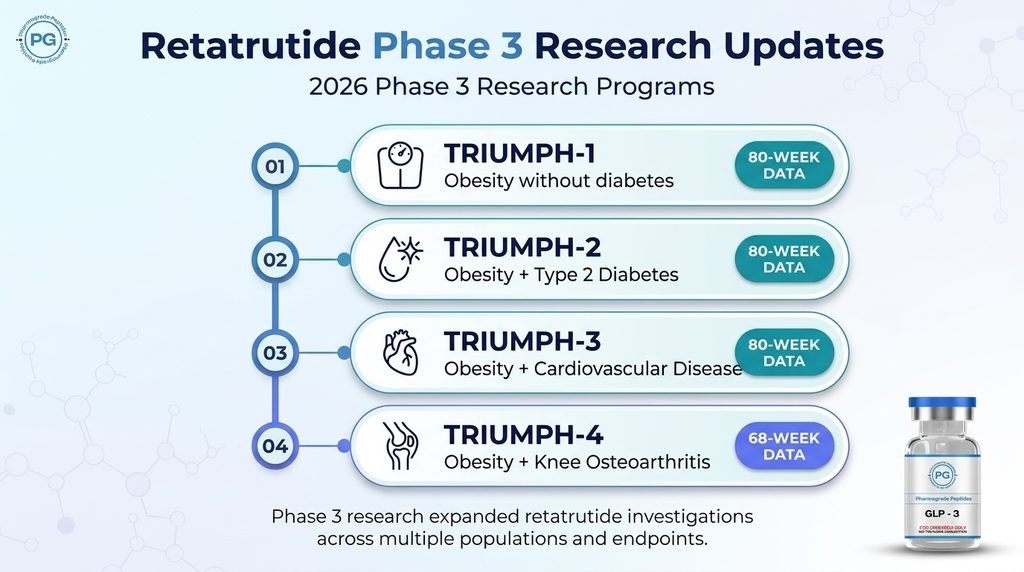
TRIUMPH-1
In May 2026, Eli Lilly announced topline results from TRIUMPH-1, a Phase 3 study involving adults with obesity or overweight and at least one weight-related condition, without diabetes.
At 80 weeks, the company reported average weight changes of 19.0%, 25.9%, and 28.3% for the 4 mg, 9 mg, and 12 mg retatrutide groups, respectively, compared with 2.2% in the placebo group. A blinded extension involving participants with baseline BMI of at least 35 also reported continued changes through 104 weeks.
These results represent a major expansion of the evidence base compared with the earlier 48-week Phase 2 study.
The company also reported changes in several cardiovascular risk markers, including waist circumference, non-HDL cholesterol, triglycerides, systolic blood pressure, and high-sensitivity C-reactive protein.
TRIUMPH-2
Another major 2026 update came from TRIUMPH-2, which studied adults with obesity or overweight and type 2 diabetes.
At 80 weeks, Eli Lilly reported average weight changes of 12.7%, 19.1%, and 20.8% for the 4 mg, 9 mg, and 12 mg groups, respectively. The company also reported improvements in HbA1c, with reductions of up to an average of 1.6%.
The Phase 3 findings were later included in a peer-reviewed Lancet publication covering the TRANSCEND-T2D-1 program, adding published evidence to the expanding clinical literature surrounding retatrutide.
TRIUMPH-3
TRIUMPH-3 extended the research into a population with severe obesity and established cardiovascular disease, with or without type 2 diabetes.
According to the July 2026 announcement, participants receiving 9 mg and 12 mg retatrutide experienced average weight changes of 21.6% and 22.6%, respectively, at 80 weeks, compared with 3.2% for placebo.
This study is particularly relevant to researchers because it examines retatrutide in a population with substantial cardiometabolic complexity rather than limiting investigation to obesity alone.
TRIUMPH-4
Research into additional conditions has also produced notable findings.
TRIUMPH-4 investigated retatrutide in adults with obesity and knee osteoarthritis. Results announced in December 2025 showed average weight changes of 26.4% and 28.7% at 68 weeks for the 9 mg and 12 mg groups, respectively, compared with 2.1% for placebo.
The study also examined knee osteoarthritis pain and physical function, broadening the research program beyond metabolic endpoints.
What Does the Triple-Agonist Mechanism Mean for Research?
One of the most interesting aspects of retatrutide research is its molecular design.
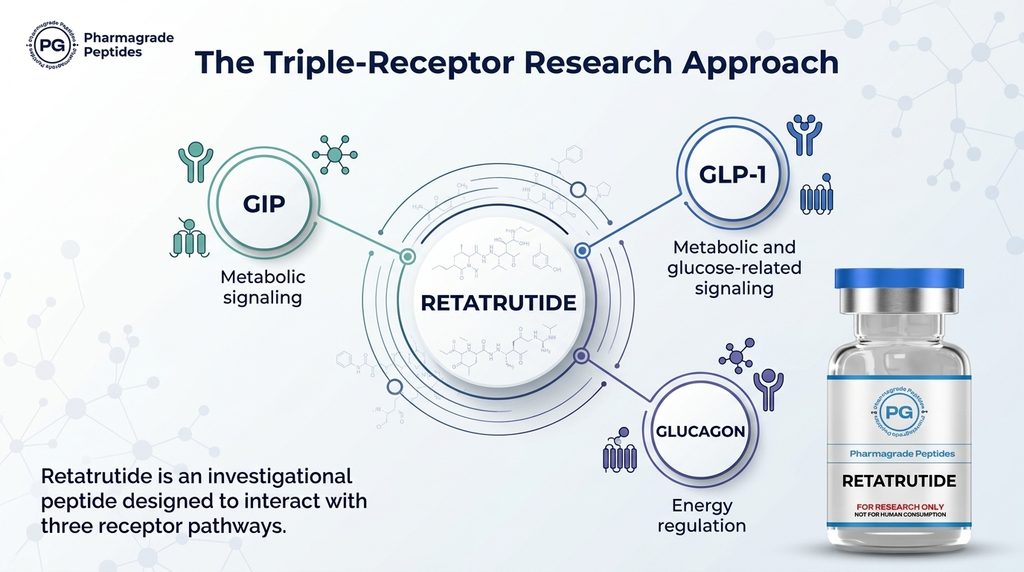
Retatrutide is described as a GIP, GLP-1, and glucagon receptor agonist. Rather than studying these pathways independently, researchers are investigating their combined activity within a single peptide candidate.
Each receptor pathway has different biological functions, which makes the combined mechanism an important area of peptide research.
GIP and GLP-1 are incretin-related pathways involved in metabolic signaling, while glucagon is associated with energy regulation and other physiological processes. The scientific rationale for combining these pathways is one of the reasons retatrutide has become an important subject in current peptide research.
For laboratory and analytical researchers, this also makes retatrutide an interesting example of how peptide design is being used to investigate multi-receptor pharmacology.
Retatrutide Research Is Expanding Beyond Weight-Related Endpoints
Another important development is the widening scope of the research program.
In 2026, reported Phase 3 data included investigations involving:
- Obesity
- Type 2 diabetes
- Cardiovascular disease
- Knee osteoarthritis
- Obstructive sleep apnea
- Glycemic markers
- Cardiometabolic risk markers
Eli Lilly has reported that its broader development program includes TRIUMPH and TRANSCEND studies covering several of these research areas.
Additional analyses have also examined areas such as sleep apnea and knee osteoarthritis within the broader development program.
This expansion matters from a research perspective because it demonstrates how one peptide candidate can become the subject of multiple specialized clinical research programs.
Retatrutide Research Status in 2026
As of September 2026, retatrutide remains an investigational compound rather than an established approved medicine.
Eli Lilly reported in July that it planned to submit a Biologics License Application to the U.S. FDA in the first quarter of 2027. The company’s August 2026 financial update also described the retatrutide clinical data package as supporting planned global registrations for obesity, obstructive sleep apnea, and knee osteoarthritis, with a separate development path for type 2 diabetes.
Importantly, announced topline results are not equivalent to final regulatory approval. Researchers following retatrutide should distinguish between:
- Published peer-reviewed results
- Conference presentations
- Company-announced topline data
- Registered clinical trials
- Regulatory submissions
- Regulatory decisions
This distinction is especially important when evaluating rapidly developing peptide research.
What Researchers Should Watch Next
The next phase of retatrutide research will likely provide more detailed information from the large Phase 3 development program.
Eli Lilly has indicated that additional retatrutide data are being presented at scientific meetings, including the 2026 European Association for the Study of Diabetes Annual Meeting, where Phase 3 results from TRIUMPH-2 are scheduled for presentation.
Future research will also help clarify how the results observed across different study populations compare with earlier Phase 2 findings.
Researchers may want to monitor several areas:
1. Peer-reviewed Phase 3 publications
Topline announcements provide important early information, but full peer-reviewed publications generally offer substantially more methodological detail.
2. Long-term follow-up
Longer observation periods can provide additional information about durability, safety, and biological responses over time.
3. Comparative research
Lilly’s development materials identify future head-to-head research involving tirzepatide, creating another potentially important area for comparative peptide research.
4. Additional metabolic research
The expanding development program includes research into areas such as metabolic dysfunction-associated steatotic liver disease, according to the company’s development materials.
5. Analytical characterization
As retatrutide research expands, analytical characterization remains an important part of peptide research. Researchers working with peptide materials commonly consider identity, purity, batch documentation, and analytical testing when evaluating research materials.
Retatrutide and the Future of Peptide Research
The development of retatrutide illustrates a broader shift in peptide science toward multi-receptor molecular design.
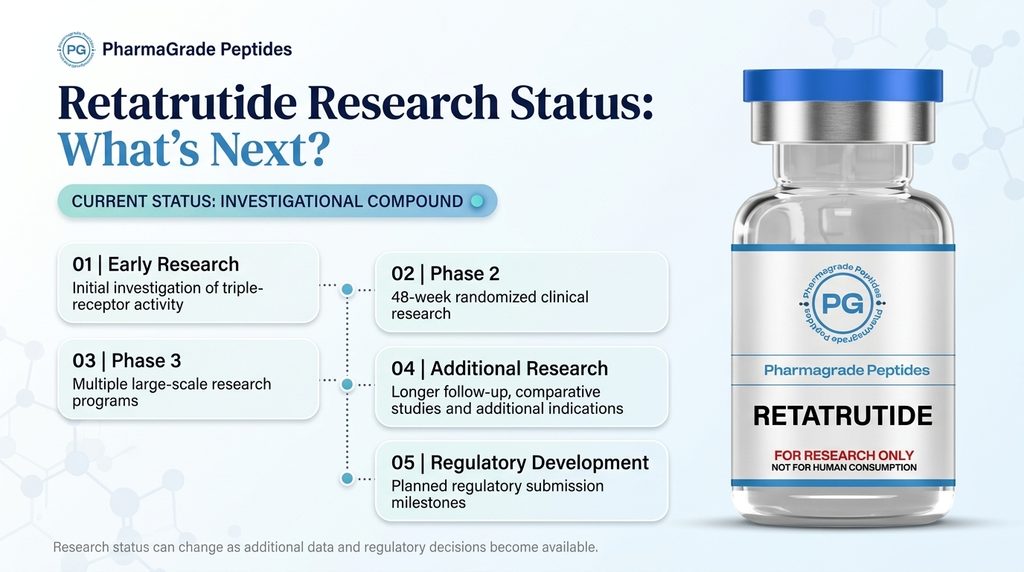
The early Phase 2 study established an initial research foundation. The 2025 and 2026 Phase 3 announcements have since expanded the available data across multiple populations and research endpoints.
For researchers, the most important takeaway is not a single numerical result. It is the progression of the research program itself: from early investigation of a triple-receptor peptide to a large development program involving multiple Phase 3 trials.
As additional results become peer-reviewed and regulatory milestones develop, the scientific understanding of retatrutide will continue to evolve.
Research Peptides and Retatrutide
Researchers evaluating retatrutide research materials should consider factors such as product identity, stated purity, batch documentation, analytical testing, and certificate of analysis availability.
PharmaGrade Peptides provides research peptides intended for laboratory and research applications. Researchers interested in retatrutide can review the available product information and accompanying documentation before making sourcing decisions.
All products are intended for research use only and are not intended for human or veterinary use.
Frequently Asked Questions
What is the latest retatrutide research?
The latest major developments are the 2026 Phase 3 results from programs including TRIUMPH-1, TRIUMPH-2, and TRIUMPH-3, along with additional data from TRIUMPH-4 and related studies.
What receptors does retatrutide target?
Retatrutide is an investigational triple receptor agonist targeting GIP, GLP-1, and glucagon receptors.
When was the first major retatrutide study published?
The pivotal Phase 2 study was published in the New England Journal of Medicine in 2023 after evaluating retatrutide over 48 weeks in 338 adults.
Is retatrutide approved?
As of September 2026, retatrutide remains investigational. Eli Lilly has stated plans to submit a Biologics License Application to the U.S. FDA in the first quarter of 2027.
Why is retatrutide important in peptide research?
Retatrutide is notable because it combines activity at three hormone receptors within one peptide candidate. Its development program also spans multiple research populations and clinical endpoints, making it a significant subject of current peptide research.
Where can researchers learn more about retatrutide research?
Researchers can follow peer-reviewed publications, clinical-trial registries, scientific conference presentations, and official development updates. These sources provide different levels of information and should be considered separately when evaluating new research findings.
Disclaimer: This article is for informational and research purposes only. PharmaGrade Peptides products are intended strictly for laboratory research and are not intended for human or veterinary use. Nothing on this page should be interpreted as medical advice, treatment guidance, dosing information, or a recommendation for human use.
