

Last updated on June 3rd, 2026 at 09:07 pm
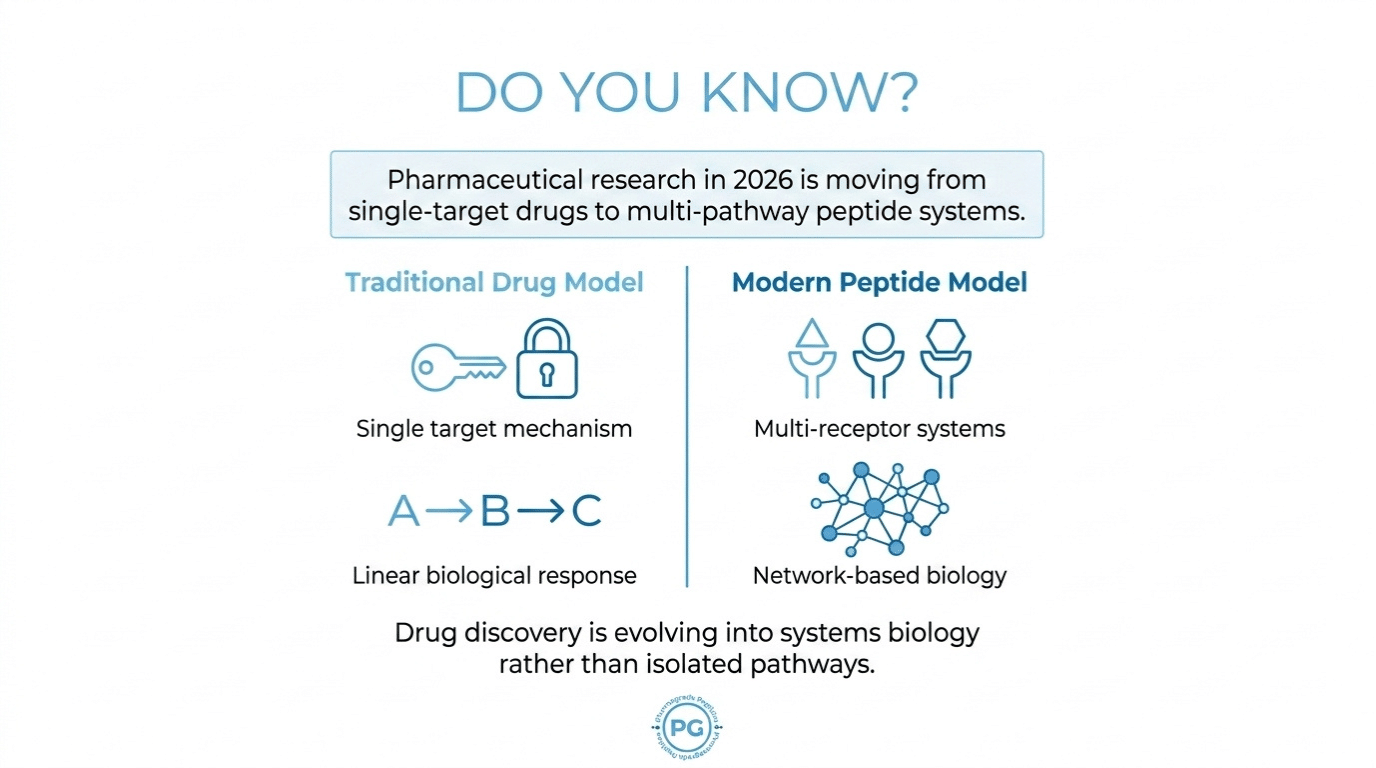
Pharmaceutical research in 2026 is undergoing a structural transformation. Traditional small-molecule drug discovery, once centered on single-target mechanisms, is increasingly being replaced by multi-pathway biological models. Within this shift, peptide-based compounds have become a central focus in metabolic, endocrine, and regenerative research pipelines.
Modern drug development is no longer limited to isolated receptor interaction. Instead, researchers are exploring compounds that can interact with multiple signaling systems simultaneously, offering more complex models for studying disease pathways, energy regulation, and cellular repair mechanisms. As interest in research-grade compounds continues to grow, platforms like Pharmagrade Peptides provide access to peptide products intended for laboratory and research purposes.
This article provides a structured overview of the most relevant peptide categories currently appearing in pharmaceutical development pipelines, with a focus on research trends, mechanistic classifications, and emerging directions in 2026.
1. METABOLIC REGULATION PEPTIDES IN MODERN PIPELINES
One of the most active areas of pharmaceutical peptide development is metabolic regulation. These compounds are primarily studied for their interaction with hormonal signaling systems that control energy balance, glucose metabolism, and appetite-related pathways in preclinical models.
Incretin-Based Research Systems
A major focus area is incretin signaling, particularly compounds interacting with GLP-1 and GIP pathways. These systems are widely studied because they play a central role in metabolic homeostasis research.
In pharmaceutical pipelines, incretin-based peptides are being evaluated for:
- Multi-receptor metabolic signaling behavior
- Energy expenditure pathway modulation in preclinical models
- Endocrine system interaction mapping
Researchers are increasingly interested in dual and triple receptor agonist systems as they allow for more complex modeling of metabolic networks compared to traditional single-pathway compounds.
Emerging Multi-Agonist Frameworks
A growing trend in metabolic peptide development is the transition from single-receptor compounds to multi-agonist systems. These include dual and triple pathway activation models used in laboratory research to simulate integrated endocrine responses.
This shift reflects a broader pharmaceutical trend toward systems biology-based drug discovery.
2. REGENERATIVE AND CELLULAR REPAIR PEPTIDE PIPELINES
Another major category in pharmaceutical development involves peptides studied in regenerative biology models. These compounds are typically investigated for their role in cellular communication, tissue remodeling, and structural protein signaling pathways.
Cellular Signaling and Repair Models
Regenerative peptides in development pipelines are often evaluated in preclinical systems focusing on:
- Cellular migration signaling pathways
- Extracellular matrix interaction models
- Fibroblast activity in controlled laboratory environments
These compounds are not viewed as direct therapeutic agents in research documentation but rather as tools for understanding biological repair mechanisms at the molecular level.
Angiogenesis and Tissue Modeling Research
A key area of interest in regenerative pipelines is angiogenesis research, where scientists study how microvascular structures form and reorganize in controlled environments.
This includes evaluation of:
- Endothelial signaling networks
- Vascular growth factor pathways
- Tissue microenvironment stability models
Such research is essential for understanding how biological systems reconstruct structural networks at a cellular level.
3. NEUROBIOLOGICAL PEPTIDE RESEARCH PIPELINES
Neuroactive peptides are also gaining attention in pharmaceutical development due to their role in central nervous system signaling research models.
These compounds are studied for their potential influence on:
- Neurotransmitter signaling systems
- Synaptic plasticity modeling in preclinical research
- Neuroprotective pathway simulations
In pipeline research, neuropeptides are primarily used to understand how signaling molecules influence brain function at a biochemical level rather than for clinical application.
4. WHY PHARMACEUTICAL COMPANIES ARE INVESTING IN PEPTIDE PIPELINES
The increasing interest in peptide-based research pipelines is driven by several scientific and structural advantages.
Biological Compatibility
Peptides are naturally occurring biological molecules, making them highly compatible with endogenous signaling systems in research environments.
Multi-Target Flexibility
Unlike traditional single-target compounds, peptides can be designed or studied to interact with multiple receptor systems simultaneously.
Systems Biology Alignment
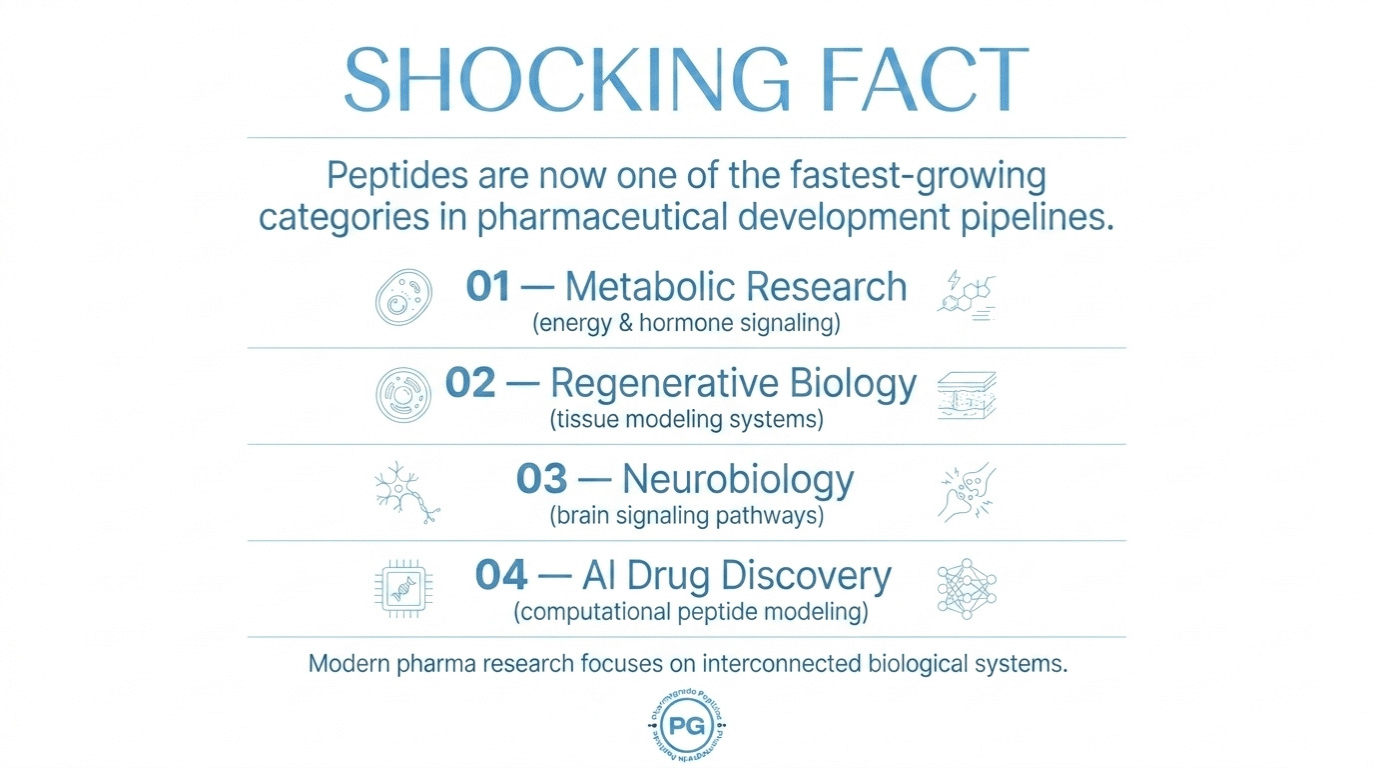
Modern pharmaceutical research is increasingly focused on systems biology, where understanding interconnected pathways is more important than isolated biological activity.
5. TRANSITION TOWARD NEXT-GENERATION PEPTIDE MODELS
The pharmaceutical pipeline is gradually shifting toward next-generation peptide systems that go beyond traditional classification.
These include:
- Multi-receptor metabolic regulators
- Hybrid signaling peptides
- Computationally optimized peptide structures in research modeling
This shift reflects the broader evolution of drug discovery from linear pharmacology to network-based biological modeling.
6. EXPANDING LANDSCAPE OF PEPTIDE PIPELINES IN MODERN PHARMACEUTICAL RESEARCH
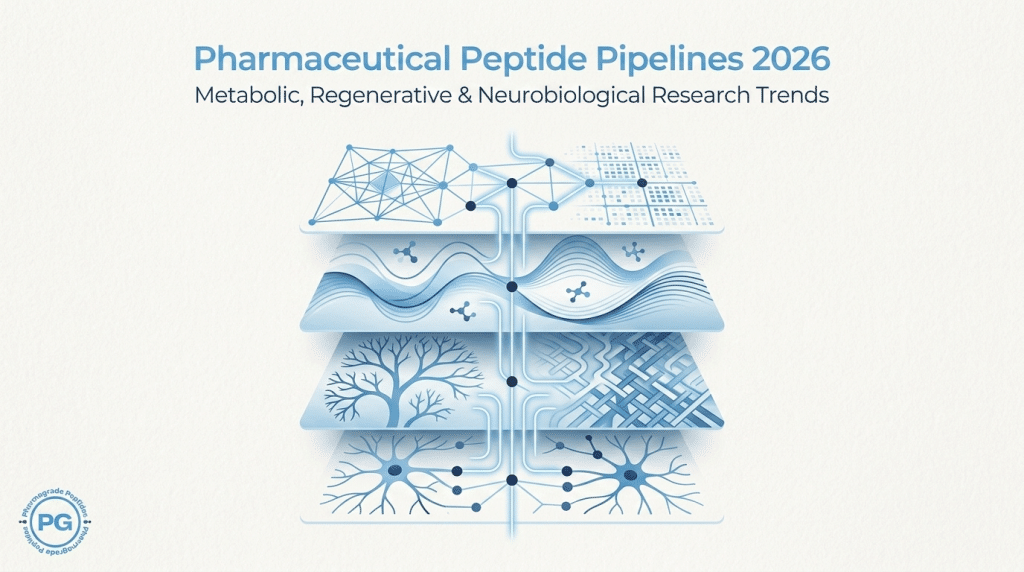
The pharmaceutical peptide pipeline in 2026 reflects a shift toward highly specialized, mechanism-driven biological research models. Rather than focusing on single-function molecules, modern development frameworks emphasize peptides that interact with complex physiological systems, including metabolic regulation, tissue signaling networks, and neurobiological communication pathways.
This evolution has created a layered pipeline structure where peptide classes are categorized not only by function, but also by their role within broader systems biology models.
7. ADVANCED METABOLIC PEPTIDE SYSTEMS IN DEVELOPMENT
Metabolic peptide research continues to dominate pharmaceutical pipelines due to its relevance in energy regulation, endocrine signaling, and glucose homeostasis modeling.
Multi-Receptor Metabolic Modulators
One of the most significant trends in current pipelines is the development of multi-receptor metabolic modulators. These compounds are studied in preclinical models for their ability to interact with more than one hormonal signaling pathway simultaneously.
Research focus areas include:
- Integrated GLP-1 and GIP pathway signaling models
- Appetite regulation network simulation studies
- Energy balance and metabolic flux modeling in preclinical systems
This multi-target approach allows researchers to analyze metabolic behavior as a networked system rather than a single receptor event.
Amylin-Associated Research Models
Another growing area involves amylin-related peptide systems. These compounds are studied in relation to satiety signaling and glucose regulation pathways within controlled research environments.
In pipeline research, amylin analogs are evaluated for:
- Hormonal interaction mapping with insulin pathways
- Satiety signaling network behavior
- Energy intake regulation models in preclinical studies
8. REGENERATIVE BIOLOGY PEPTIDE PIPELINES
Regenerative peptide research remains a core pillar of pharmaceutical development pipelines. These compounds are studied primarily for their role in cellular communication systems, tissue modeling frameworks, and extracellular matrix interactions.
Tissue Signaling and Cellular Communication Models
In modern research pipelines, regenerative peptides are analyzed for their interaction with:
- Endothelial signaling networks
- Fibroblast activity regulation systems
- Extracellular matrix remodeling pathways
These models are used to simulate biological repair processes at a molecular level without implying clinical or therapeutic outcomes.
Angiogenesis and Vascular Modeling Systems
Angiogenesis research continues to be a critical focus in regenerative pipeline development. Scientists study how vascular structures form, stabilize, and reorganize in controlled biological environments.
Key research domains include:
- Microvascular network formation models
- Growth factor signaling simulation systems
- Endothelial response behavior in experimental conditions
This area remains essential for understanding how biological systems manage structural regeneration at a cellular level.
9. NEUROBIOLOGICAL PEPTIDE PIPELINES AND COGNITIVE MODELING
Neurobiological peptide research is increasingly relevant in pharmaceutical development due to its application in central nervous system signaling models.
Synaptic Signaling and Plasticity Research
Neuroactive peptides in development pipelines are studied for their role in:
- Synaptic communication modeling
- Neurotransmitter regulation systems
- Neural plasticity simulation frameworks
These compounds are primarily used to explore how signaling networks in the brain respond to biochemical modulation in controlled research environments.
10. EMERGING PIPELINE STRUCTURES IN 2026
Pharmaceutical peptide development is increasingly defined by integrated modeling approaches rather than isolated compound evaluation.
Systems Biology Integration
Modern pipelines incorporate systems biology frameworks that combine multiple biological layers, including metabolic, vascular, and neurological systems into unified research models.
This allows for more comprehensive simulation of physiological processes.
Computational Drug Discovery Models
A major advancement in peptide pipeline research is the increased use of computational modeling and AI-assisted simulation systems.
These tools enable researchers to:
- Predict peptide-receptor interaction behavior
- Model multi-pathway biological responses
- Simulate long-term signaling network effects in silico
KEY DRIVERS OF PEPTIDE PIPELINE EXPANSION
Several factors are contributing to the rapid expansion of peptide-based pharmaceutical pipelines:
Biological Precision
Peptides offer a highly specific interaction potential with biological systems, making them valuable in precision-based research models.
Scalability in Research Design
Peptide systems can be adapted into multiple experimental frameworks, including in vitro, in vivo, and computational models.
Alignment with Systems Pharmacology
Modern drug discovery is increasingly focused on systems pharmacology, which emphasizes network-based biological interactions rather than isolated targets.
FUTURE OUTLOOK: PEPTIDE PIPELINES BEYOND 2026
The future of peptide research pipelines is expected to focus on hybrid biological systems that combine multiple signaling domains into unified research frameworks.
Key expected developments include:
- Hybrid metabolic-neuro peptide models
- AI-designed peptide structures for research simulation
- Multi-pathway biological system integration platforms
These advancements indicate a continued shift toward highly integrated and computationally enhanced pharmaceutical research models.
FREQUENTLY ASKED QUESTIONS
What are peptide pipelines in pharmaceutical research?
They refer to compounds currently under investigation in preclinical and clinical research models for understanding biological mechanisms and signaling systems.
Why are peptides important in drug development?
Peptides offer high specificity and adaptability in modeling complex biological systems.
Are peptide pipelines focused on treatment outcomes?
No. They are primarily focused on research and exploration.
What is the biggest trend in peptide research?
The shift toward multi-pathway and systems biology-based research models.
DISCLAIMER
This article is intended for informational and scientific research purposes only. All references to peptides and biological systems are strictly within preclinical research contexts and are not intended for medical use, diagnosis, or therapeutic application.
References:
- Jastreboff, Ania M., et al. “Triple–Hormone-Receptor Agonist Retatrutide for Obesity.” New England Journal of Medicine, vol. 389, no. 6, 2023, pp. 514–526. doi:10.1056/NEJMoa2301972.
- Frias, Juan P., et al. “Efficacy and Safety of LY3298176, a Dual GIP and GLP-1 Receptor Agonist, in Patients with Type 2 Diabetes.” The Lancet, vol. 392, no. 10160, 2018, pp. 2180–2193. doi:10.1016/S0140-6736(18)32260-8.
- Rosenstock, Julio, et al. “Tirzepatide versus Semaglutide Once Weekly in Patients with Type 2 Diabetes.” New England Journal of Medicine, vol. 385, no. 6, 2021, pp. 503–515. doi:10.1056/NEJMoa2107519.
- Muller, Torsten D., et al. “Glucagon-Like Peptide 1 (GLP-1).” Molecular Metabolism, vol. 30, 2019, pp. 72–130. doi:10.1016/j.molmet.2019.09.010.
- Drucker, Daniel J. “Mechanisms of Action and Therapeutic Application of Glucagon-Like Peptide-1.” Cell Metabolism, vol. 27, no. 4, 2020, pp. 740–756. doi:10.1016/j.cmet.2018.03.001.
- Holst, Jens Juul, and Mette M. Rosenkilde. “GIP as a Therapeutic Target in Diabetes and Obesity: Insight from Incretin Co-Agonists.” The Journal of Clinical Endocrinology & Metabolism, vol. 105, no. 8, 2020, e2710–e2716. doi:10.1210/clinem/dgaa327.
- Finan, Brian, et al. “Unimolecular Dual Incretins Maximize Metabolic Benefits in Rodents, Monkeys, and Humans.” Science Translational Medicine, vol. 7, no. 318, 2015, 318ra205. doi:10.1126/scitranslmed.aac5120.
- Finan, Brian, et al. “A Rationally Designed Monomeric Peptide Triagonist Corrects Obesity and Diabetes in Rodents.” Nature Medicine, vol. 18, no. 12, 2012, pp. 1887–1894. doi:10.1038/nm.3012.
- Rizzo, Paola, et al. “Amylin: A Multifaceted Peptide in Energy Balance and Metabolic Regulation.” Endocrine Reviews, 2024.
- Miras, Alexander D., et al. “Multi-Receptor Peptide Agonists in Obesity and Diabetes: Current Status and Future Directions.” Nature Reviews Endocrinology, 2025.
- Sannino, Serena, et al. “Artificial Intelligence in Peptide Drug Discovery and Design.” Frontiers in Pharmacology, 2024.
- Vlieghe, Danny, et al. “Peptides as Medicines: From Discovery to Therapeutic Development.” Drug Discovery Today, 2024.
- Lau, J., et al. “The Expanding Role of Peptides in Modern Drug Development Pipelines.” Nature Reviews Drug Discovery, 2025.
- Zupancic, T., and M. J. Strasser. “Systems Biology in Modern Pharmacological Research.” Pharmaceutical Research, 2024.
- Smith, Andrew R., et al. “Computational Modeling of Multi-Pathway Peptide Signaling in Preclinical Drug Discovery.” Briefings in Bioinformatics, 2025.
